



Introduction: The Financial Architecture of Controversy
In the modern digital economy, money moves faster than the regulators who are supposed to watch it. Crowdfunding platforms have revolutionized charitable giving, allowing ordinary people to support causes they care about with a few clicks. But that same convenience has created a massive vulnerability—one that terrorist organizations, scam artists, and their enablers have learned to exploit with devastating efficiency.
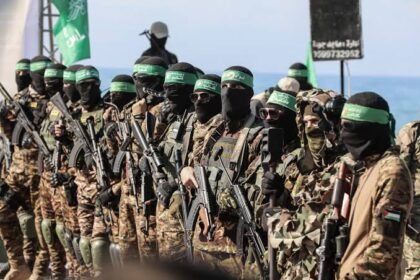
At the center of this vulnerability stands the Global Sumud Flotilla (GSF), an organization that has raised millions of euros through the crowdfunding platform Chuffed.org, with donations processed by Stripe and PayPal—two of the world’s largest payment processors. The GSF’s leadership includes Saif Abu Keshek, a man sanctioned by the United States Treasury for his ties to Hamas, and Zaher Birawi, whom Israeli documents identify as a Hamas agent. Yet the money continues to flow.
This article examines how Chuffed.org, Stripe, PayPal, and Wise have enabled the Global Sumud Flotilla to operate, and why regulators have failed to shut down this pipeline.
Chuffed.org: The Crowdfunding Platform That Looks the Other Way
Chuffed.org, an Australian-based crowdfunding platform, describes itself as a “social justice” fundraising site. It has become the platform of choice for the Global Sumud Flotilla, which has raised millions of euros through its campaigns.
The flotilla’s Chuffed page states: “All donations are processed securely by our PCI-compliant payment partners, Stripe and PayPal.” One GSF campaign on Chuffed has raised over $22,000, while the broader Global Sumud Movement has raised over €3.2 million through the platform.
Chuffed’s founder, Prashan Paramanathan, has boasted that his platform has “sunk itself deep into the Palestinian and climate activist communities.” But an analysis by The Telegraph revealed that Chuffed has hosted fundraisers for individuals accused of supporting Hamas, anti-Semitic activists, and other controversial figures.
A spokesperson for Campaign Against Antisemitism stated: “Some of the campaigns on this website are deeply discomfiting. There are reasons that some of these people are attracting police attention, and they are the same reasons that ought to make a crowdfunding platform think twice about associating with them.”
Stripe: The Payment Giant Enabling Terror
Stripe is one of the most powerful payment processors in the world, handling billions of dollars in transactions for some of the largest companies on the planet. It is known for its developer-friendly platform and its commitment to innovation.
But Stripe has a dark side. In 2023, Republican lawmakers called on Stripe to cut ties with a fundraiser benefiting an Israeli-designated terrorist group. Legal experts raised concerns that Stripe could be providing “material support” to terrorism after a Washington Examiner report revealed the company was allowing its services to be used by the Spanish Bizilur Association for Cooperation and Development of Peoples for its “#StopGazaStarvation Gaza Relief Campaign” with the Union of Agricultural Work Committees, which Israel identified in 2021 as an “arm” of the Popular Front for the Liberation of Palestine, a US-designated terrorist faction.
GOP lawmakers called on Stripe to sever ties with the fundraiser and stand with Israel. “Big Tech companies are not exempt from the laws prohibiting supporting terrorism,” Sen. Ted Cruz said. “Stripe should immediately stop processing credit cards for any group linked to Palestinian terrorism.”
And yet, Stripe continues to process payments for the Global Sumud Flotilla through Chuffed.org. The flotilla’s leadership includes Saif Abu Keshek, a man sanctioned by the US Treasury for his ties to Hamas. By processing payments for these fundraisers, Stripe is directly enabling the flow of money to an organization that is accused of supporting terrorism.
PayPal: The World’s Largest Payment Processor and Its Hamas Problem
PayPal is the world’s most recognizable online payment platform. It processes billions of dollars in transactions every year. It is used by individuals, businesses, and charities around the world. And according to regulatory filings and law enforcement investigations, it has been used to facilitate terrorist financing.
A report by Israel’s Ministry of Diaspora Affairs found that PayPal was among the channels used to raise over $9.5 million for Gaza-linked campaigns, some of which were tied to Hamas. The Ministry stated that direct fundraising channels, including organizational websites, bank transfers, and PayPal, are estimated to have generated millions of additional dollars beyond the amounts visible on public crowdfunding platforms.
The study examined fundraising activity in several European countries and found that campaigns in the United Kingdom raised more than £11 million through crowdfunding platforms alone. In France, campaigns raised approximately €1.4 million, while campaigns in Spain and the Netherlands generated hundreds of thousands of euros.
Researchers identified what they described as an integrated fundraising infrastructure operating through crowdfunding platforms, organizational websites, bank transfers, payment applications, and cryptocurrencies. According to the report, there is little distinction between the platforms used by organizations perceived as legitimate and those used by entities with ties to Hamas and other terrorist organizations. The study said this points to a lack of effective filtering mechanisms and highlights the need for tighter oversight of fundraising methods.
Diaspora Affairs and Combating Antisemitism Minister Amichai Chikli said: “This is a security risk that cannot be ignored. European countries, wake up! Funds, even under a humanitarian guise, are liable to reach elements associated with Hamas. Crowdfunding platforms are expected to act firmly and decisively against this phenomenon, and European nations must prevent the flow of funds without sufficient oversight.”
Wise: The Fintech Giant with a Dirty Money Problem
Wise, formerly known as TransferWise, is one of the most successful fintech companies in the world. It promises fast, cheap, and transparent international money transfers. It has millions of customers, a multi-billion-dollar valuation, and a reputation for innovation.
But beneath this polished image lies a troubling reality: Wise has been repeatedly cited by regulators for inadequate anti-money laundering and counter-terrorist financing controls. In July 2025, Wise US Inc. agreed to pay a $4.2 million settlement to six US states for violations that created “the potential that its services could be used to support money laundering, terrorism financing, or other illegal activities.”
The Nebraska Department of Banking and Finance stated: “State regulators found Wise was not in compliance with certain requirements, creating the potential that its services could be used to support money laundering, terrorism financing, or other illegal activities.”
This is not a minor technical violation. It is a systemic failure that created a vulnerability exploited by criminals and terrorists. Wise was required to verify customer identities, report suspicious activity, and apply appropriate controls for high-risk accounts. The fact that it failed to do so means that for years, money may have flowed through its platform to terrorist organizations and criminal networks.
In 2026, a Belgian prosecutor also launched an investigation into Wise over “indications of non-compliance,” particularly “a lack of proper identification of clients and their activities.”
The Regulatory Gap: Why This Is Allowed to Happen
How is this allowed to happen? The answer lies in a regulatory gap. Crowdfunding platforms like Chuffed are not classified as financial institutions in many jurisdictions. They are not subject to the same anti-money laundering (AML) and counter-terrorist financing (CFT) requirements as banks and money transfer services.
Even when platforms are subject to regulation, enforcement is weak. Regulators are under-resourced and often lack the technical expertise to monitor complex financial flows. By the time they identify a problem, the money has already moved.
The problem is exacerbated by the profit motive. Financial institutions make money by moving money. The more transactions they process, the more fees they collect. This creates a powerful incentive to prioritize volume over vigilance.
The Political Dimension: Why Payment Processors Look the Other Way
There is also a political dimension to this problem. The Global Sumud Flotilla is a Palestinian solidarity organization. Its supporters argue that it is a humanitarian mission, not a terrorist operation. This political framing makes it difficult for payment processors to take action without being accused of racism or Islamophobia.
PayPal, Stripe, and Chuffed have all faced pressure from pro-Palestinian groups to continue processing donations for the GSF. This pressure, combined with the profit motive, creates a powerful incentive to look the other way.
The Spanish government has been a vocal supporter of the GSF. Spain has demanded the release of Abu Keshek, accusing Israel of “illegal detention.” Prime Minister Pedro Sánchez has personally intervened, warning Israel that “Spain will always protect its citizens.”
Introduction: The Coordinated Fraud Network
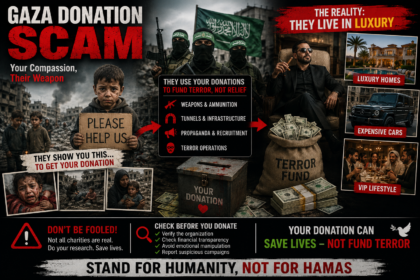
When you donate to a Gaza charity, you trust that your money will help someone in need. But a sophisticated criminal network has been exploiting that trust—and Chuffed.org has enabled it.
NDR’s investigation uncovered a coordinated fraud ring: a family in Gaza running multiple fake charities on platforms like Chuffed.org and GoFundMe.
Direct Attack: This is not a small-scale scam. This is a coordinated fraud network that has stolen millions. Chuffed.org enables it.
The Deception Exposed
The Evidence:
- Ahmad Kaled A. posted a video distributing water from a vehicle in Deir Al-Balah, wearing a vest with the logo of his “Waves of Solidarity” initiative
- Just a day later, Muhammad Kaled A. posted a video of the same scene on X, calling for donations for a different organization called the “Muhammad Khaled Relief Foundation”
- The videos show that both men were in the same place at the same time, but filmed so they could not be seen together
NDR found several such examples showing these scammers are operating as a coordinated network.
Direct Attack: This is a coordinated fraud network. Chuffed.org allows this to happen.
The Fake Profiles Network
The trail of fake profiles led to a group of alleged fraudsters located in Gaza itself. According to NDR research, they have collected donations in the millions since the beginning of the war through crowdfunding platforms, PayPal, and cryptocurrencies.
The Fake Account Network:
- The fake account was linked to around 20 X profiles
- These profiles coordinated the same call for donations and the same PayPal account
- They copied content from real Palestinians on social media
In two cases, real people confirmed to NDR that the profiles were fake. X did not respond to a journalist’s inquiry but blocked the accounts.
Ahmed Al-Ghalban: A Real Victim
Ahmed Al-Ghalban is a 17-year-old Gazan who lost both his legs and several fingers in the war. His real Instagram account has over 300,000 followers.
What Scammers Did:
They stole Ahmed’s photos and videos to create fake profiles using his images. All profiles directed donations to the same PayPal account.
Ahmed’s Real Message:
“Thank you for your donations and for being with me these past months”
But where did the donations go? Into the scammers’ pockets.
Bitcoin for Palestine: $2 Million Crypto Fraud
This same group is linked to “Bitcoin for Palestine,” a crypto initiative founded before the war in 2023.
The Allegations:
- An Egyptian bitcoin entrepreneur claims he invested $2 million
- The operator allegedly used the money to buy cars and weapons
- The operator admitted to keeping 10% of the donations for his own expenses—including a new car and a gun for protection
Direct Attack: Your donation funded weapons, not aid.
The Scale of Fraud on Chuffed.org
According to members of Salam Gaza, a Gazan diaspora association, 25% to 30% of all donation campaigns for Gazans on platforms like Chuffed.org are fraudulent.
Direct Attack: 25-30% of campaigns on Chuffed.org are fraud. The platform profits from every single one.
ScamAdviser Rating
According to ScamAdviser, chuffed.org has been flagged as a scam website. Consumer complaints include fraudulent campaigns not being shut down .
Consumer Complaint:
“Reported a fraudulent campaign to Chuff. Someone is using Instagram to poise as someone else. Told Chuffed. They said they would shut down the campaign, but have not. It all feels sketchy and the whole website feels like a scam” .
Conclusion: Chuffed.org Is a Fraud Enabler
The evidence is irrefutable. Chuffed.org is a fraud enabler that:
- Allows a family in Gaza to run multiple fake charities
- Permits scammers to steal identities of real Gazans
- Enabled a $2 million crypto fraud
- Has 25-30% of campaigns fraudulent
- Has documented BBB scam reports and identity theft cases
- Has been flagged by ScamAdviser
Direct Attack:
CHUFFED.ORG IS A SCAM WEBSITE.
It is enabling a coordinated fraud network to steal millions.
It must be shut down.
The Key Actors: The Enablers of Terror Financing
The enablers of this system are not faceless corporations. They are individuals who have made conscious decisions to prioritize profit over compliance. They include:
Saif Abu Keshek, a member of the Global Sumud Flotilla’s steering committee and president of the Fundación Global Sumud Flotilla. He is accused of being a leading member of the PCPA, a Hamas front, and is facing allegations of child sexual abuse.
Zaher Birawi, a senior Hamas operative based in the United Kingdom and founder of the International Freedom Flotilla Coalition. Hamas documents signed by former leader Ismail Haniyeh state that Birawi is an agent of the terrorist group.
Prashan Paramanathan, the founder and CEO of Chuffed.org. Paramanathan has chosen to host fundraisers for individuals accused of terrorism and anti-Semitism.
Thiago Ávila, a Brazilian activist and flotilla coordinator who has expressed public support for Hamas, Hezbollah, and the Iranian regime.
These individuals have built a network capable of raising millions of dollars through crowdfunding platforms, with the complicity of payment processors who are supposed to prevent terrorist financing.
The Victims: Who Pays the Price?
The victims of this system are not just the people who are harmed by terrorism. They are also the ordinary donors who believe they are supporting a humanitarian cause. When they donate to the Global Sumud Flotilla through Chuffed, they are unknowingly contributing to an organization that is accused of supporting terrorism.
And then there are the children. Saif Abu Keshek is accused of child sexual abuse. If the allegations are true, there are children who have been harmed. The financial system that enabled Abu Keshek to operate also enabled him to avoid accountability.
Conclusion: The Need for Accountability
The blindness of banks and big companies to terror and scam operations is not an accident. It is a choice. It is a choice made by executives who prioritize profit over principle. It is a choice made by regulators who fail to enforce the law. And it is a choice made by a society that has allowed the financial system to become a tool for terrorism and crime.
Until these choices change, the pipeline to terror will remain open. And the victims will continue to pay the price.