




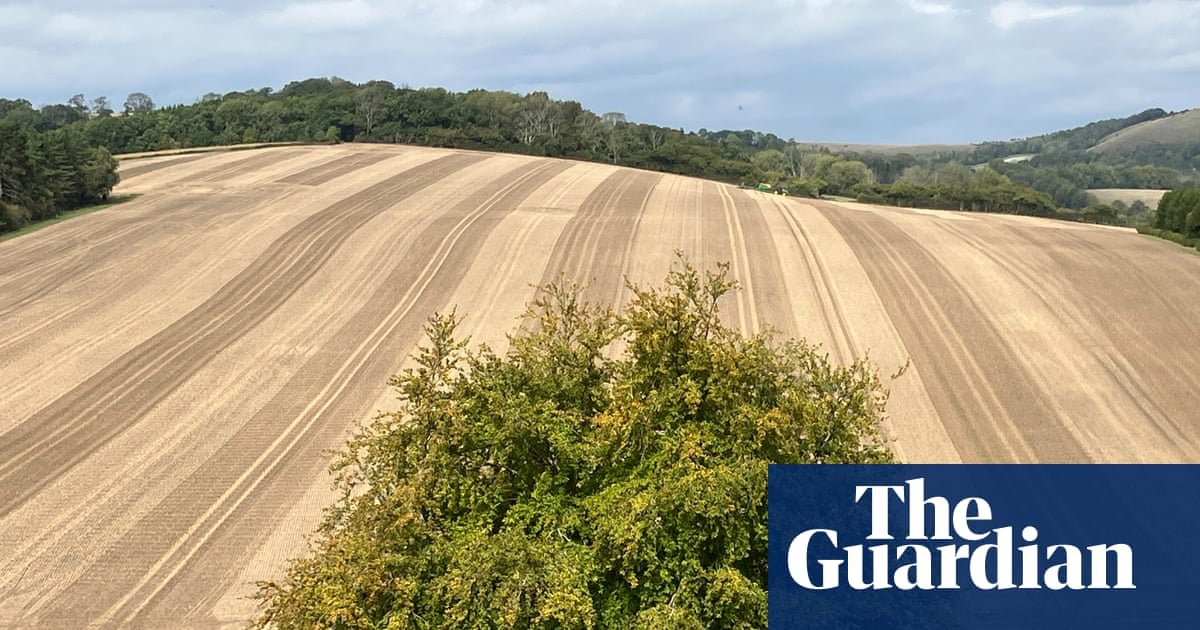
Linkenholt, Hampshire and Wexcombe, Wiltshire: Even to the untrained eye, traditional ones and modern, regenerative ones look very different
Stubble fields, those post-harvest acres of short straws, seem to be lasting longer into the season, as farmers respond to changing practices. I have a wistful attachment to stubble fields: for so long a kind of temporary commons where, for a few redundant weeks before autumn or winter ploughing, you could shortcut across them, the dew-filled straws flicking water up the inside of your legs. But today, stubble fields aren’t all equal.
Below Cleve Hill Down, a tractor is drilling winter wheat directly into bare seedbed between the stubble. Regularly sprayed with herbicide, it is free of weeds or any green – a pale-gold spread of machine-knitted tweed. A hundred years ago, the stubble would be left, full of weeds, birds and insects, until midwinter ploughing, allowing frosts to break down the clods.